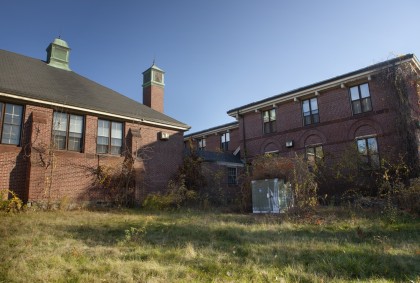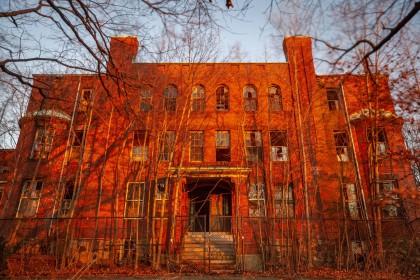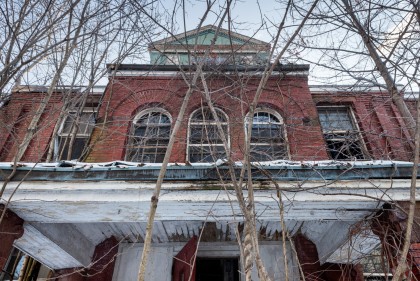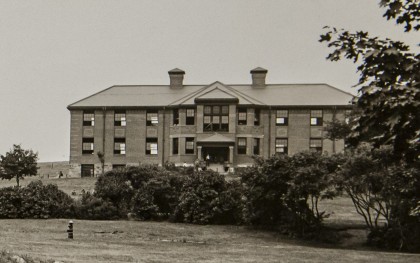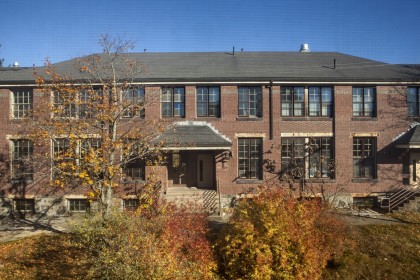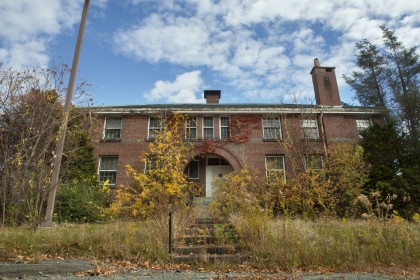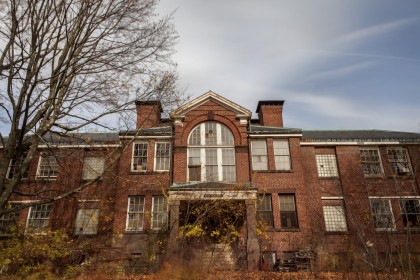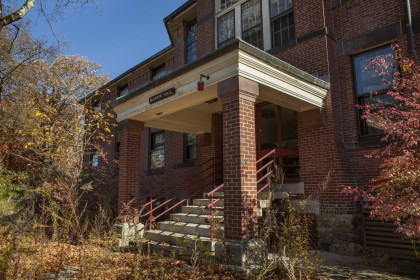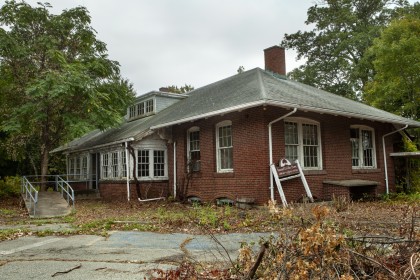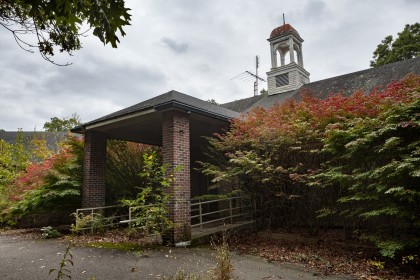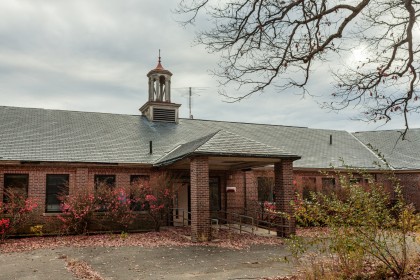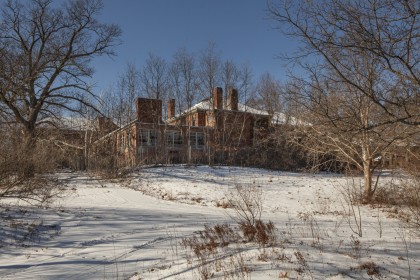
West Building
Landmark 1890 facility for severely disabled children, foundational to the Fernald's history.
Explore the surviving structures of Fernald through architecture, chronology, and campus context. Sort and search below to move quickly from landmark buildings to lesser-known corners of the site.
Landmark 1890 facility for severely disabled children, foundational to the Fernald's history.
Former utility plant and laundry later converted to residential use, reflecting major functional shifts across the Fernald's operational history.
Expansive farm operation that fed the campus through resident labor, later ended as institutional practices changed.
Early school and gym building that anchored education, therapy, and worship before those functions shifted elsewhere.
First administration building and family residence, later reused for staff housing and records.
Original boys' dormitory later converted to activity programming as campus care models gradually shifted.
Former early power and laundry building later converted to warehouse and archival storage for institutional records.
Early girls' dormitory with influential cross plan and used as a model for subsequent residential buildings.
Early male residence later replaced by Kelley Hall, marking a major mid-century campus transition.
Former quarantine infirmary later adapted for music therapy programs.
Small 1896 sterilization building for epidemic control, later converted to electrical service infrastructure.
Large custodial ward building later emblematic of back-ward neglect, then renovated amid growing public scrutiny.
Former female residential hall that later transitioned from institutional housing to public-housing use.
Industrial training facility where residents learned trades and produced goods used across the Fernald's and nearby state institutions.
Queen Anne residence built for the superintendent and his successors.
Earliest nurses' residence later expanded and heavily remodeled before conversion to regional administrative offices.
Queen Anne nurses' residence built for expanding staff, retaining notable interior features from the Fernald's early growth period.
Twin Queen Anne nurses' home that housed staff and preserves characteristic period detailing from the Fernald's early campus expansion.
Early Queen Anne dormitory that evolved from boys' housing into mixed institutional offices and support services.
Prominent Queen Anne former Girls' Home named for Dr. L. Maude Warren, retaining strong exterior character.
Queen Anne hall built to relieve overcrowding, later renamed for longtime matron Mrs. Dolan.
Nurses' residence for the South campus, later remodeled and repurposed for county law-enforcement use.
Former men's infirmary later associated with back-ward conditions, then reused for state agency safety and inspection offices.
Staff recreation building later expanded with medical services and a nationally significant developmental-disability library.
Final central boiler plant distributing steam campuswide through tunnels, blending industrial function with Colonial Revival design.
Craftsman staff-housing pair near utilities, notable for arched porches and coordinated two-story forms.
Craftsman staff-housing pair near Chapel Road, later extensively renovated during the institution's final decades.
Pre-institution Greek Revival house long serving Fernald League volunteer headquarters.
Nineteenth-century house later adapted for administrative offices and day-care programming.
Italianate estate house repurposed for child development services.
Former central laundry later repurposed for support operations, including linen staging and therapeutic equipment maintenance.
Central trades and repair hub housing workshops and vehicle service essential to daily campus operations.
Large communal kitchen and dining facility that later baked for multiple state institutions before replacement.
Colonial Revival headquarters that directed Fernald administration for decades and remained central to institutional operations until closure.
Main entertainment and worship venue featuring an auditorium floor and strong Colonial Revival character.
Nursery building for youngest residents, designed for light and air, later converted to furniture repair shop.
Distinct Tudor Revival former staff housing later adapted as public housing while retaining notable architectural finishes.
Women's infirmary-turned-dormitory named for Edouard Seguin, reflecting evolving care models in the mid-century campus.
PWA-built men's infirmary later reused as dormitory and transitional housing during deinstitutionalization-era changes.
Agricultural greenhouse complex supporting farm production and resident horticultural programming within the Fernald's working campus economy.
Small entrance sales shop where residents sold plants and crafts, providing practical retail and money-handling experience.
Shared burial ground whose history underscores advocacy for dignified memorial practices for institutional residents.
Former Thom Hospital later renamed nursing center honoring chaplain advocacy for dignified end-of-life resident care.
The Fernald's largest residential-care complex, designed for high-support populations.
Interfaith chapel established with Catholic support, later serving multiple traditions.
Major mid-century residential unit for children and highly dependent residents.
Day-program center for more independent residents.
Owl Hill X-plan complex combining housing, classrooms, and programs, built to replace the deteriorated Boys' Home.
Evaluation and treatment facility for physically disabled residents, later reused by Tufts Dental program.
Major disability research center later integrated with UMass.
Research and rehabilitation facility focused on evaluation and community transition, later removed during post-closure campus demolition.
Late-era duplex cottage cluster introducing smaller residential settings, aligning with deinstitutionalization trends.
Late-era program building for cottage residents, representing modern service space rather than historic institutional architecture.
Connected modern program buildings for cottage residents and later tenants.
Primary late-era food operations center that replaced older kitchens and remained active through the Fernald's final years.
Modern single-story day-program building for cottage residents, later demolished during broad late-campus site clearance.
Final major campus residential addition providing independent-living units.